
PRINT AS PDF
Technological innovation occurs at the confluence of knowledge and imagination. Technology then shrinks, merges, and often reappears inside something more powerful. Devices that once dominated homes, offices, and studios fade when their functions are absorbed by smaller, cheaper, more capable systems.
Television moved from bulky furniture built around broadcast programming to thin, networked screens connected to streaming, gaming, video calls, apps, and on-demand entertainment. Computers followed a similar path. Mainframes gave way to desktops, desktops to laptops, and laptops to tablets and smartphones. The computer did not disappear. It dissolved into everyday life and became a portable intelligence layer carried in the pocket.
Storage media show the same pattern. Floppy disks, CDs, DVDs, external drives, and memory cards once seemed essential. But as storage became smaller, denser, cheaper, and more networked, the physical object receded. Files moved from disks to drives, from drives to flash memory, and from flash memory to invisible cloud systems.
This is a recurring law of technological change: as power increases and size decreases, separate devices are pulled into larger platforms. The clock, calculator, map, music player, flashlight, notebook, scanner, recorder, and video camera all became smartphone features. Specialized tools survive among professionals and enthusiasts, but the mass market moves toward convergence.
The camera is now undergoing the same transformation. For more than a century, it was a distinct object that had to be purchased, carried, protected, and learned. Quality depended on lenses, sensors or film, exposure settings, lighting, timing, and skill. But smartphone cameras now combine better sensors, multiple lenses, faster processors, stabilization, night mode, portrait mode, high dynamic range processing, and computational photography. What once required a dedicated camera, tripod, flash, lens kit, darkroom, or editing workstation is increasingly handled by a device that also manages nearly every other part of modern life.
Now, the combination of artificial intelligence (AI) and smartphone cameras is disrupting photography. The application of AI now makes it possible for photographs taken by smartphones to match or even surpass the quality of those taken by high-end cameras. Below are six photos taken by a smartphone and then processed through AI.
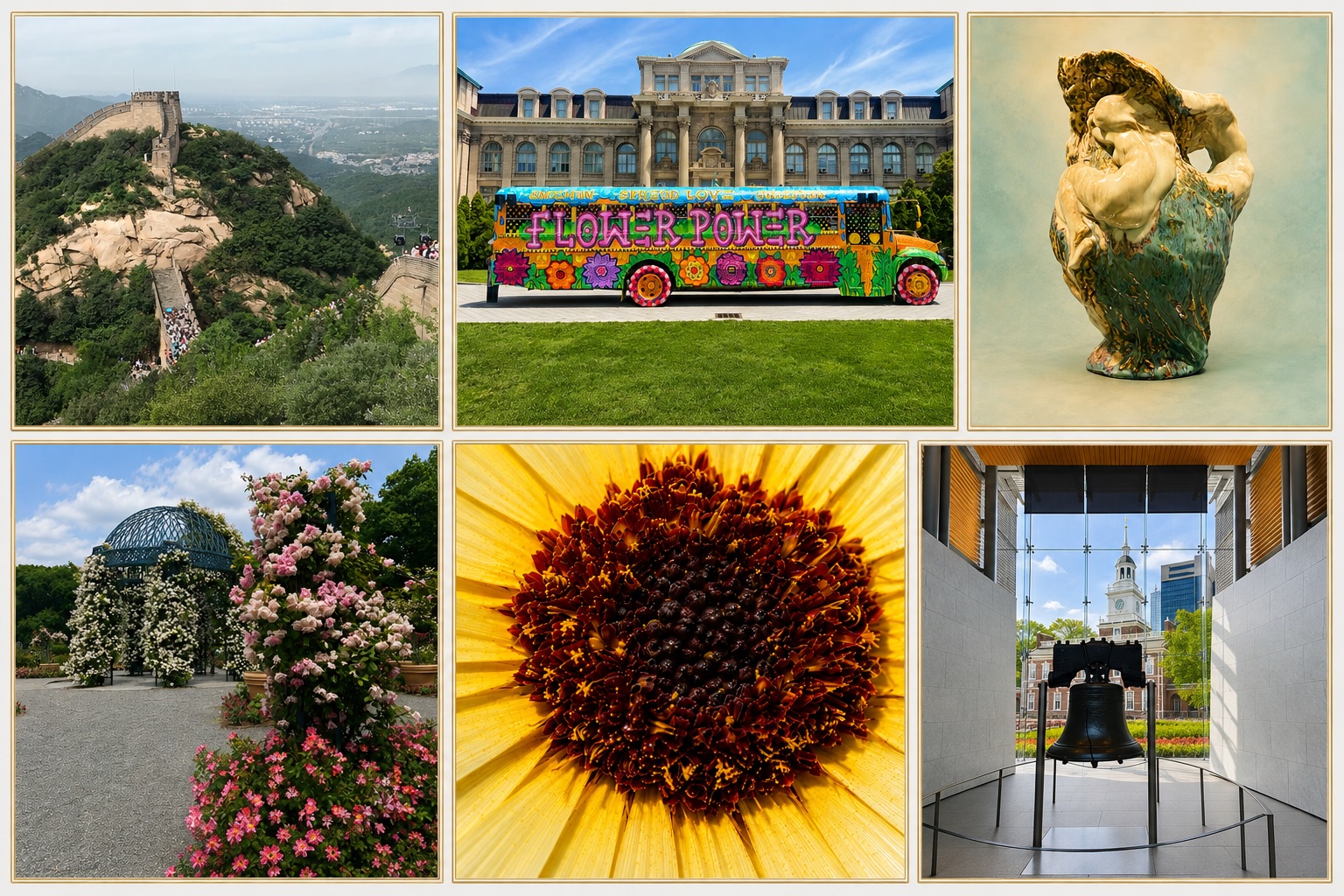
This is just the beginning of an emerging revolution in photography. In the coming years, AI capture assistants will likely become standard features in advanced smartphone cameras. They will help users choose portrait, document, artwork, night, macro, and action modes. They will lock focus, optimize exposure, detect blur risk, capture multiple frames, and fuse them into a stronger final image. They will make ordinary users dramatically better photographers without requiring them to understand ISO, shutter speed, white balance, focal length, aperture, or dynamic range.
Eventually, smartphone cameras may become full visual intelligence systems. These systems will not merely record light. They will understand intent. They will recognize whether a user is trying to photograph a painting through glass, a passport document under poor lighting, a moonlit skyline, a fast-moving child, a flower at macro distance, or a museum object behind a reflective case. They will guide framing, optimize capture, anticipate problems, collect supporting frames, and complete the image with AI-aware editing before the user ever opens a separate app.
At that point, the camera will no longer be just a device for taking pictures. It will become a creative partner.
The result will be more than an upgrade to photography. It will be a democratization of photographic creation. The moats that once protected professional-quality image-making such as expensive equipment, technical training, specialized software, studio access, and years of trial and error, will dissolve.
That shift will threaten anyone whose advantage depends mainly on tool ownership, technical scarcity, or gatekeeping. Photographers whose value rests primarily on superior cameras, lenses, lighting rigs, studio setups, or editing workflows may find their traditional advantage weakening. When a person with a phone, a prompt, and strong visual imagination can produce striking images, the market will ask a harder but better question: What do you see that others do not?
The best photographers will adapt. Their value will rest less on equipment and more on judgment, taste, direction, narrative, trust, authenticity, and lived experience.
Camera manufacturers, stock photography companies, commercial studios, and traditional art-world gatekeepers may resist this change. But society as a whole will benefit. The largest beneficiaries will be ordinary creators. People who could never afford professional cameras, lighting equipment, studio space, models, travel, or years of technical training will gain new expressive power. A student, small business owner, teacher, activist, writer, or amateur artist will be able to create images that once required large budgets.
The barrier to entry will shift from money to imagination. In this new world, photography will no longer belong mainly to those who own the best camera or the most powerful post-processing software. It will belong to those with the clearest vision, the strongest taste, the most original imagination, and the best judgment about what an image should mean.

This entry is licensed under a Creative Commons Attribution-NonCommercial-ShareAlike 4.0 International license.

